What a standby generator costs in Fairfield County
A whole-home standby generator in Fairfield County typically runs $12,000–$20,000 fully installed — equipment, concrete pad, transfer switch, gas work, permits, and startup included. Smaller essential-circuits systems can come in under that range; large homes with multiple AC units, a pool, or electric heat go over it. As a sanity check, Generac's own guidance puts the average U.S. home standby system at $8,000–$16,000 including equipment and installation, with a straightforward 22 kW project typically $10,000–$16,000 — Fairfield County's labor rates, older housing stock, and permit requirements push typical whole-home projects toward the higher band. Here is what actually drives the number.
Price by generator size
Equipment is the biggest single line item, and it scales with kilowatts. Installed totals below assume a straightforward install — pad near the panel, gas available, no panel replacement.
- 10–14 kW — essentials only: fridge, lights, Wi-Fi, well pump or sump pump, boiler controls, garage door. For smaller homes that just need to ride out an outage.
- 18–22 kW — the Fairfield County sweet spot: one central AC or heat pump, kitchen, laundry, most lights and outlets. This is what most 2,000–3,500 sq ft homes install.
- 24–26 kW — whole-home with load management: two AC units, pool pump, full kitchen, electric heat zones. The generator sheds big loads automatically so a smaller unit behaves like a bigger one.
- 32–48 kW (liquid-cooled) — large estates, multiple systems, elevators, guest houses. Liquid-cooled units are quieter, run longer between services, and cost substantially more.
Why Fairfield County prices run high
Three local factors push installed prices above national averages. First, the county's older housing stock means many homes need panel work before a generator can connect at all. Second, gas: many towns have natural gas service, but homes beyond the gas main need a propane tank with trenching, and tank placement has to satisfy setback and clearance rules. Third, every town runs its own permitting and inspection process, and coastal towns add their own placement and flood-zone considerations.
Timing is a price factor
Winter storms drive demand here, not hurricanes alone: quotes signed in late spring and summer typically install in 2–5 weeks, while post-storm demand after a nor'easter or tropical storm can stretch lead times to 8–12 weeks and firm up pricing. The cheapest month to buy a generator in Fairfield County is usually the month nobody is thinking about the next storm.
Fuel types: natural gas vs propane
Nearly every residential standby generator in the county burns one of two fuels:
- Natural gas — unlimited runtime, no refueling, lower fuel cost. Right choice where Eversource or Southern Connecticut Gas service already reaches the home. Slight power derate vs propane.
- Propane (LP) — full rated output and total independence from the gas grid; needs a tank (above-ground is common here, buried where space and rules allow) and delivery contracts for long outages.
- Diesel — rare in residential here; mostly liquid-cooled estates and commercial. Best longevity, highest equipment cost.
What drives your specific quote
- Generator size (kW) and air- vs liquid-cooled
- Distance from the electrical panel and gas source — long trenching runs add up
- Panel upgrade: homes with a full or outdated panel often need electrical work first, commonly $1,500–$3,500
- Propane tank size and burial
- Town requirements — permits, setbacks, screening, and coastal rules vary across Fairfield County towns
- Maintenance plan and extended warranty (7–10 year coverage is commonly bundled into quotes)
Ongoing costs
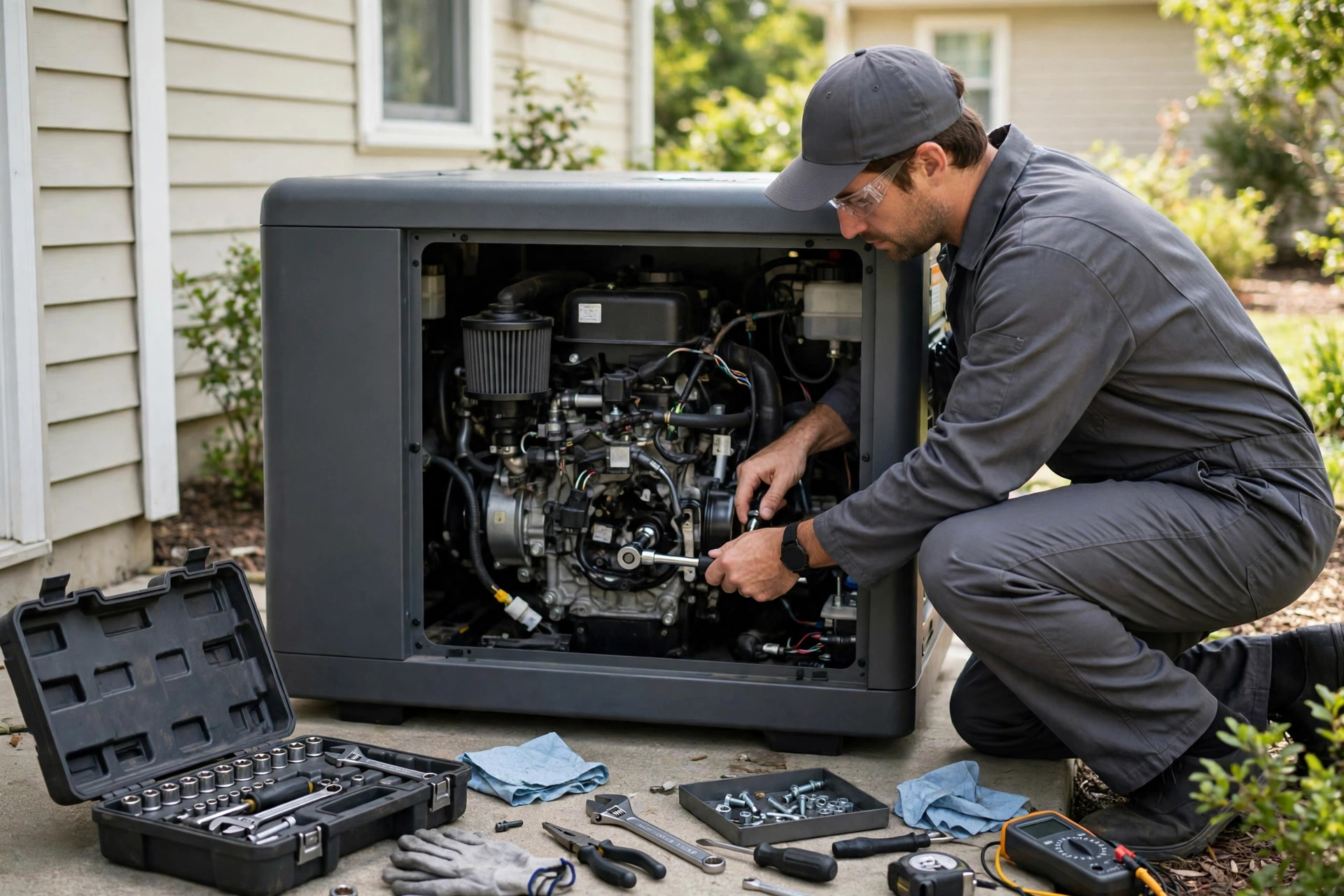
Budget roughly $300–$500 a year for an annual maintenance visit (oil, filters, plugs, battery check, exercise-cycle verification), plus fuel during outages. A generator that isn't maintained is a lawn ornament — every installer on this site offers maintenance plans, and skipping them can void warranty coverage. In Connecticut, that visit is also when cold-weather items like the battery get checked before winter.